Medical device engineering
Medical device prototypes and development tooling
Build and evaluate device concepts with clear control over materials, surface finish and critical dimensions. Modulabs routes each reviewed job to qualified suppliers aligned with the process and documentation requested.
Send the specification
Upload CAD, drawings, quantity and working requirements.
Order check
Engineers check material, process, inspection and supplier fit before production.
Confirmed quote
Receive the reviewed price by email, then continue to payment.
Typical applications
Parts your team can source
From early development to repeat low-volume demand, the manufacturing route is reviewed around the part’s actual duty.
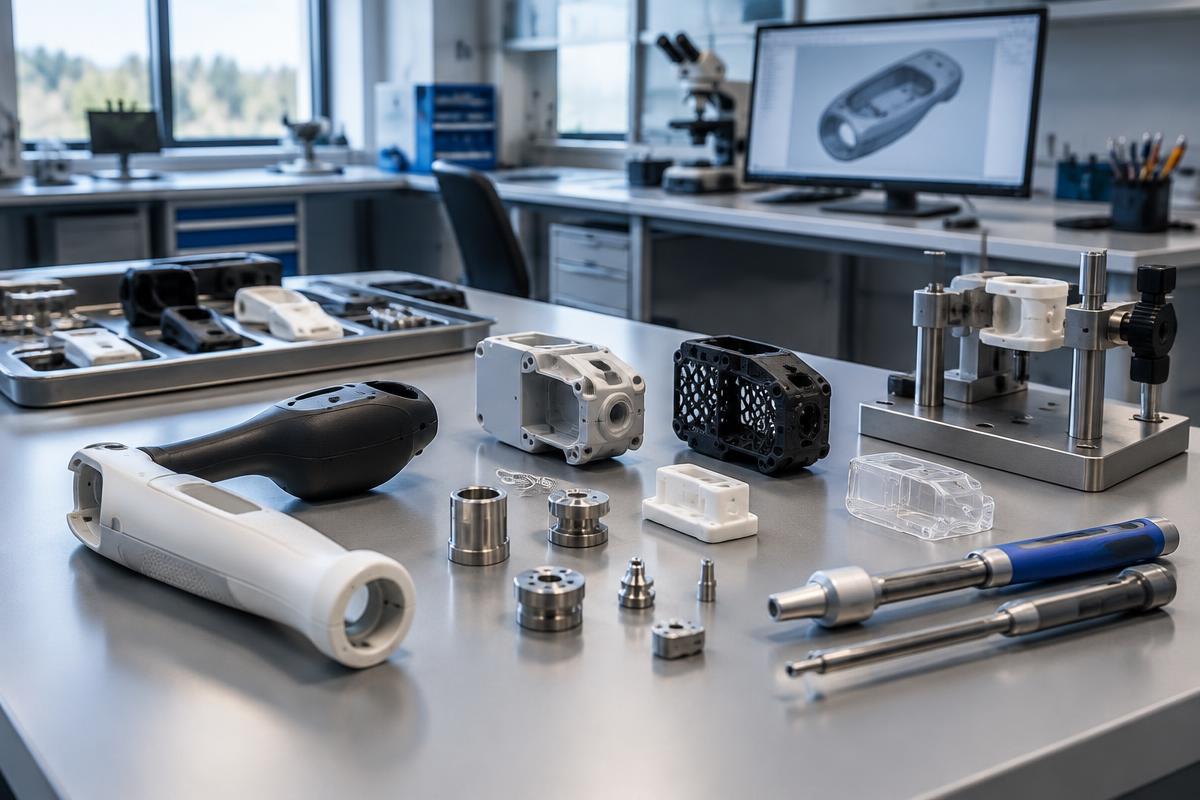
- Instrument and handheld housings
- Surgical tool development parts
- Diagnostic equipment fixtures
- Ergonomic and usability models
- Laboratory automation components
- Assembly and verification jigs
Processes
A practical route for each stage
High-detail 3D printing
Cosmetic, ergonomic and assembly models for rapid design evaluation.
View processPrecision CNC machining
Repeatable metal and polymer components with drawing-controlled features.
View processLow-volume moulding
A route from representative prototypes to repeatable polymer production parts.
View processMaterials
Materials selected for the working environment
Stainless steel 316L
Corrosion-resistant precision hardware where the specified grade and finish are appropriate.
PEEK
High-performance polymer for demanding thermal, chemical or mechanical environments.
Medical-purpose resins
Useful for representative prototypes when the exact exposure and validation limits are understood.
Aluminium
Fast-machining option for development fixtures, test equipment and non-contact housings.
Design considerations
What to define before manufacture
Intended use matters
Separate visual and bench prototypes from parts intended for patient contact, sterilisation or clinical use.
Material evidence
Specify required declarations, certificates and lot records before ordering; generic material labels are not sufficient evidence.
Controlled requirements
Provide drawings for critical interfaces, inspection points and finish requirements, including any cleaning or sterilisation exposure.
Medical device prototyping