High-pressure die casting
For volumes where machining stops making sense. Send your STEP and target annual volume, we'll quote the die, the casting and the machining together, with a DFM review of draft, wall thickness, porosity risk and gating first.
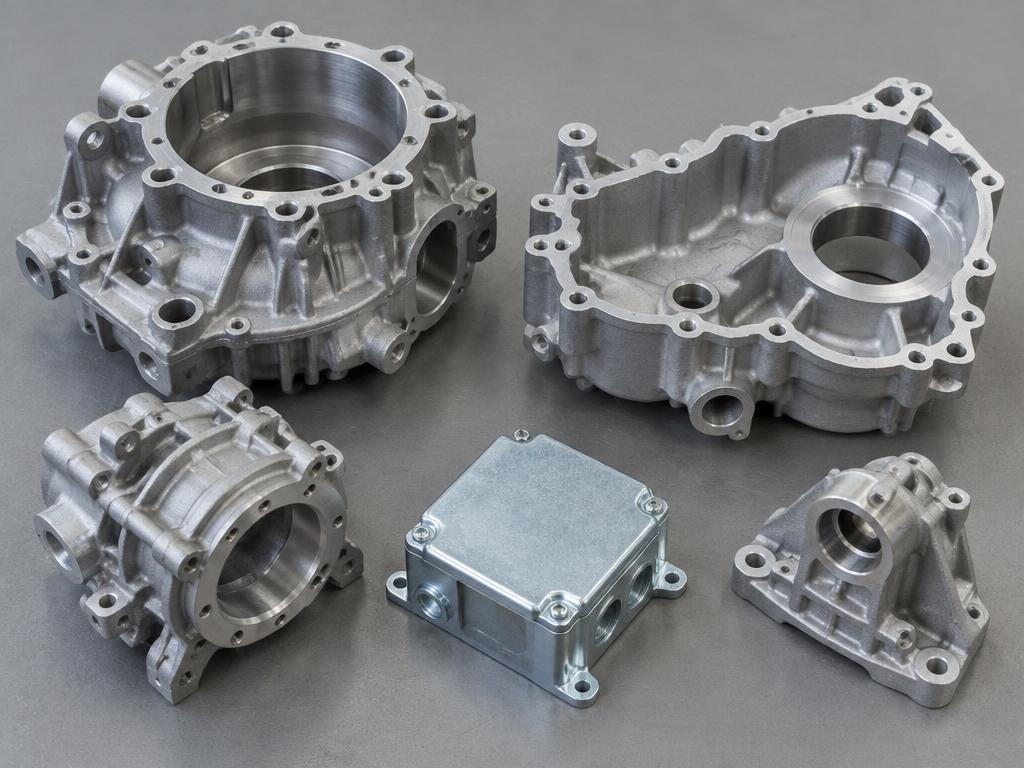
ADC12, A380, AlSi9Cu3, ZA-8 zinc, AZ91D magnesium
10 g to 8 kg shot weight, up to 800 tonne machines
H13 steel dies, single or multi-cavity, 5–7 weeks
1.5–4 mm nominal wall, 1–2° draft, generous radii
Trim, shot blast, CNC machining, tapping, leak test
As-cast, powder coat, anodise (Al), chrome or e-coat
Choosing a material
Casting alloy affects weight, wall thickness, corrosion resistance and the secondary machining needed for critical features. Final grade and tooling are agreed after a manufacturability review.
- Aluminium
- Light and strong with good thermal performance. Often suited to housings and heat-sink geometries.
- Zinc
- Flows into thin walls and fine details. Consider for smaller, intricate components.
- Magnesium
- Very low weight at the cost of more specialised handling. Useful where mass is critical.
What the tooling review covers
Wall, draft and parting
Consistent walls and draft help the casting leave the die. Undercuts and complex parting lines may require extra tooling work.
Porosity and critical faces
Point out sealing surfaces, threads and pressure-bearing areas. These may need machining, testing or a change in gate location.
Volume and finishing
Share the expected annual volume, alloy and coating requirements so tooling and per-part costs can be reviewed together.
Related processes
Choose by production volume, material, geometry, and tooling commitment.
CNC machining
Better for prototypes, low volumes, tighter tolerances, or parts that do not justify dedicated tooling.
View serviceInjection moulding
Better for high-volume plastic parts where low weight, insulation, or complex polymer features matter.
View serviceAluminium extrusion
Better for long parts with a constant cross-section, then cut and machined to final length.
View service